What is PROMYS?
PROMYS (Program in Mathematics for Young Scientists) is a six-week residential math summer camp held at Boston University in Massachusetts. The point of the program is to essentially live, breathe, and eat math — specifically number theory, which has seen a surge of exciting research in recent years. But the real goal isn’t just to teach high schoolers a bunch of number theory. It’s to learn how to think like a mathematician: to understand proofs and the underlying structure of mathematics.In this article I’ll give a week-by-week account of my time at PROMYS, both for future applicants and for anyone simply curious about what a math summer camp is actually like.
Week 1: Getting Adjusted
This was my first time being away from home for more than a single night. Honestly, a pretty scary prospect. The first day was hectic — finding my dorm, getting settled, meeting people. But the orientation helped a lot, and it was genuinely exciting to be surrounded by 79 other students who love math.
The first lecture started bright and early on July 4th. Wake up at 8 a.m., get breakfast, and make it to morning lecture by 9 a.m. The content was deceptively simple: what are the integers? What do you picture when you think of ℤ — a set? A graph? It was a great introduction to PROMYS’s guiding theme: “Think Deeply About Simple Things.” A quote I’ll never forget.Then came the first problem set. It was pretty manageable — a mix of numerical problems and “podasips” (problems or discover a similar interesting problem), like “prove that 1 divides any number.” Not bad at all.
That evening we watched fireworks at a park near BU, and I discovered you could just walk around Boston alone. Compared to Delaware, Boston felt endlessly interesting.The problem sets escalated quickly after that. The hardest point in the first week came when we had to prove the Division Algorithm — yes, the one from elementary school. Sure, you’ve used it since third grade, but have you ever thought about why it works? The proof hinges on the fact that any non-empty set of natural numbers has a least element. An obvious-sounding statement that turns out to be incredibly powerful.
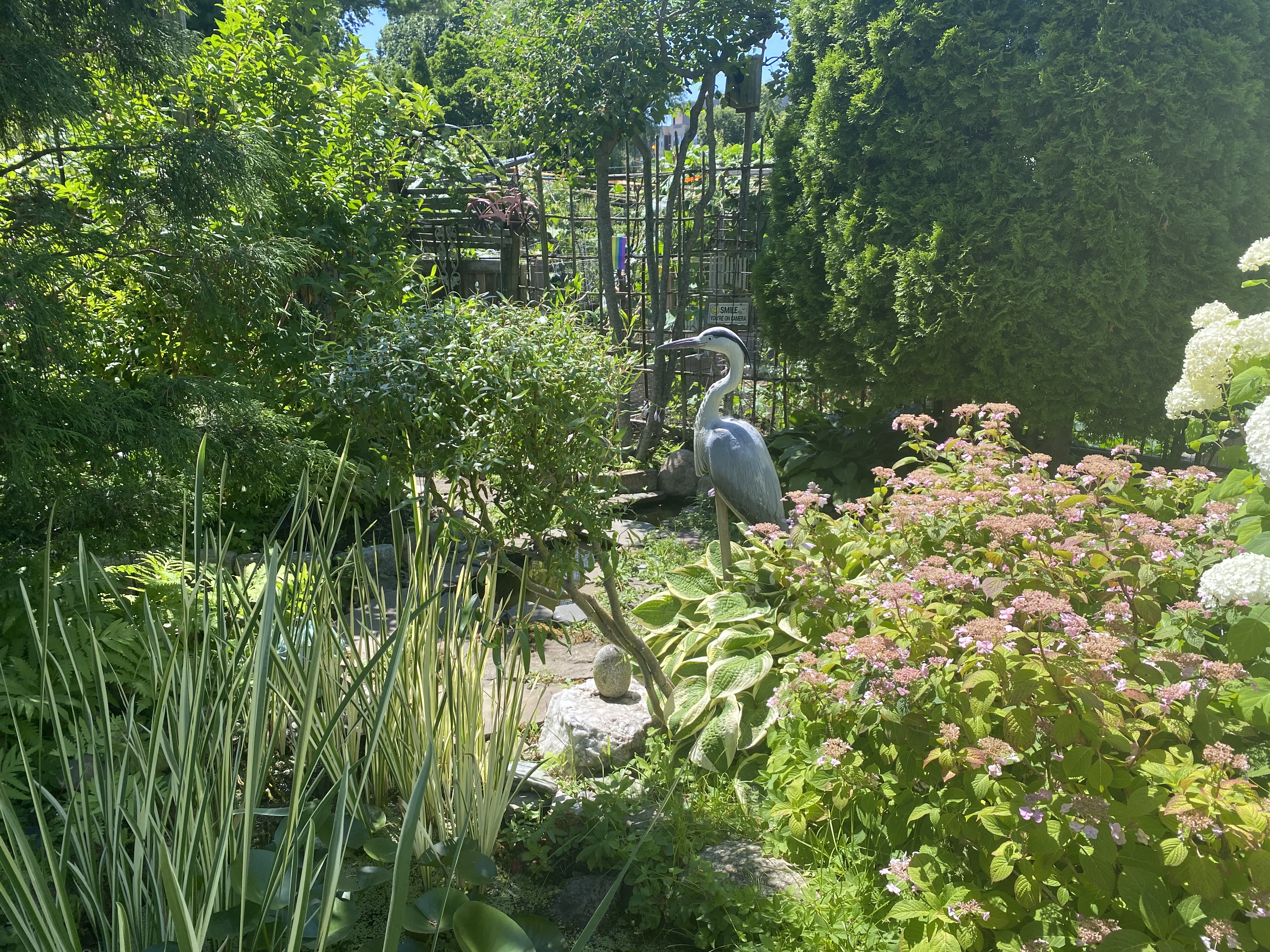
That weekend we had free rein of the city as long as we checked in. A friend and I visited the Fenway Gardens — absolutely stunning — though we got so lost that Boston locals kept stopping us to ask for directions. It took three hours of walking to spend thirty minutes in the garden. Lesson learned: bring sneakers to any summer camp. I was on scorching concrete in loafers for three hours. Ouch.
Oh, and this was also the week I learned how to do my own laundry. Better late than never.
Week 2: It’s okay right now
The second week was actually pretty manageable. The problem sets got noticeably harder — building on existing skills rather than introducing new ones — with things like proving modular equations. Modular arithmetic itself is a simple concept (just division and remainders) but it can look intimidating on paper. Legendre hadn’t shown up yet, so I wasn’t struggling too much.
I was starting to settle into the rhythm: up at 8, breakfast, lecture at 9. We also began exploration labs this week, which are designed to simulate the research process — not original research, but open-ended investigations into existing math. My strategy was to pick the most obscure topic available. I won’t spoil anything for future attendees, but I came away with a much deeper appreciation for the mathematics of card shuffling. Magicians, it turns out, know a little more math than they let on.
The convenience store next to the dorms became my go-to breakfast spot — the dining hall was great, I was just too lazy. Weekends were the highlight as always, mostly spent playing cards with friends or doing math in the common room. The counselors’ “mandatory fun” was, as advertised, very hype.
Week 3: Probably the most hot week
This week was relatively chill mathematically, though we finished building the full chain of reasoning by the end of it — I won’t spoil the details, but it set the stage for everything that followed. One thing that struck me was how naturally the course expanded beyond integers into other rings, like the complex numbers or units, once you had the right framework.
The real highlight of the week was the talent show. Everyone had to perform an act — the alternative was doing the worm in front of everyone, which, honestly, wasn’t that bad of a threat, but still. My friend told a story while I frantically illustrated it on a whiteboard. It was about a farmer named Bob who went through three divorces. Funnier than it sounds, I promise. The rest of the show turned into a giant karaoke session and the energy was incredible. I got to bed around 2 a.m. after staying up talking with my roommate.
That weekend I found an air-conditioned building on campus and parked myself there until 11 p.m. doing math. Good times.
Week 4: RSI vs. PROMYS Frisbee Game
By this point the course had shifted from building the chain of reasoning to proving more advanced theorems — Legendre’s symbol and beyond. The counselors and lecturers were fantastic throughout, even if the heat was not.
But the real highlight of the week was the annual ultimate frisbee game against RSI (Research Science Institute at MIT). PROMYS usually loses. Not this year. For the first time in 16 years, we won. I’d like to think I had something to do with it, but I probably didn’t.
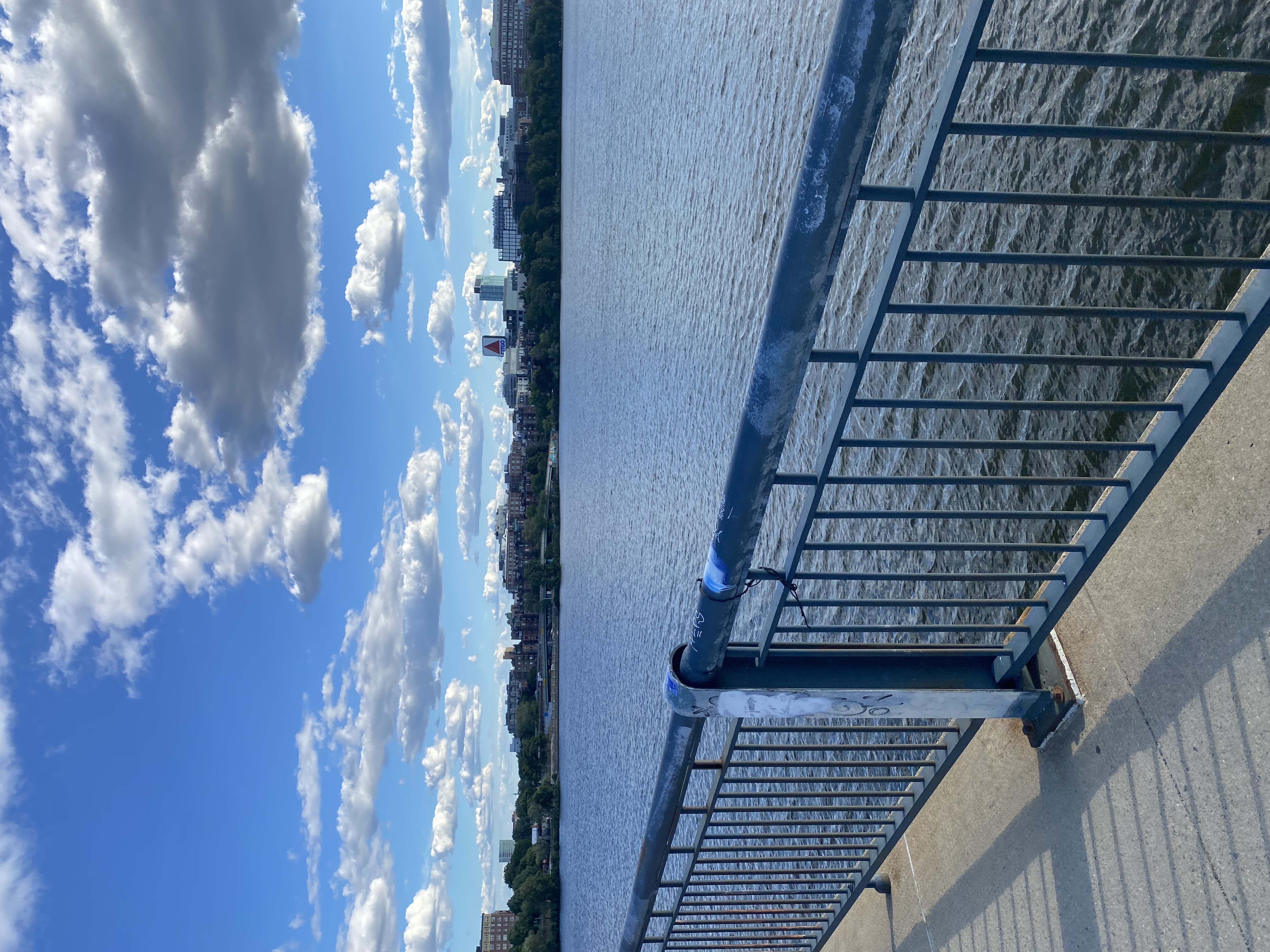
We walked from BU to MIT — about 30 minutes — which gave us a great look at the campus. The bridge over the Charles River connecting MIT to the rest of the city is genuinely beautiful. One of those views that photos can’t fully capture. This was also one of the weeks where the math started clicking the most for me, which made it feel like the best week overall.
Week 5: Almost Over
This was a busy week — we had to present the findings from our exploration labs, and I ended up covering for a lab partner who couldn’t make it, so I was juggling quite a bit.
The weekend involved a proper MIT tour and a shopping trip to Newbury Street with a friend. There were a lot of very fancy chocolate shops. They were expensive. They were overpriced. But they looked incredible, so naturally we bought six knuckle-sized chocolates for $20. Worth it.
Then I went back to the dorm and took a very long nap. The mandatory fun that week was a math meme presentation. I genuinely didn’t know what to make of it.
Week 6: Wow. I was there for 42 days.
It’s funny, when you say 42 days versus 6 weeks, 42 days sounds quite short. But trust me it was anything but that. I made a lot of good friends at the camp and it was too short of a time together! Especially because a lot of them were from California, Canada, or India. The math in this week escalated quite a bit. They held a bunch of minicourses in various topics such as Type Theory, Projective Geo, Linear Algebra, Group Theory, and a bunch of others.
They were hard to understand but higher math is always interesting nontheless. Then on the last day they went a bit crazy, they had MINI MINI courses. These were like 5 minutes each and no one could understand anything because the counselors were speaking so fast. But it was fun.
The last day finished off with a LOT of icecream. We had a final ceremony where you got your yearbook and a photo with the professor. Everyone stayed up till like 2 am signing each other’s yearbooks and saying goodbye to the people who had flights early in the morning. When it finished I was quite sad, but it was a lot of fun and I learned a lot. You could say my life took a long pause there.
Week 6: Final Thoughts.
That was a lot! I tried to leave out the bigger mathematical details so as not to spoil anything for future attendees. If you’re considering applying to PROMYS — or any math summer program — I’d say go for it without hesitation. It’s one of those experiences that’s hard to fully describe but impossible to forget.